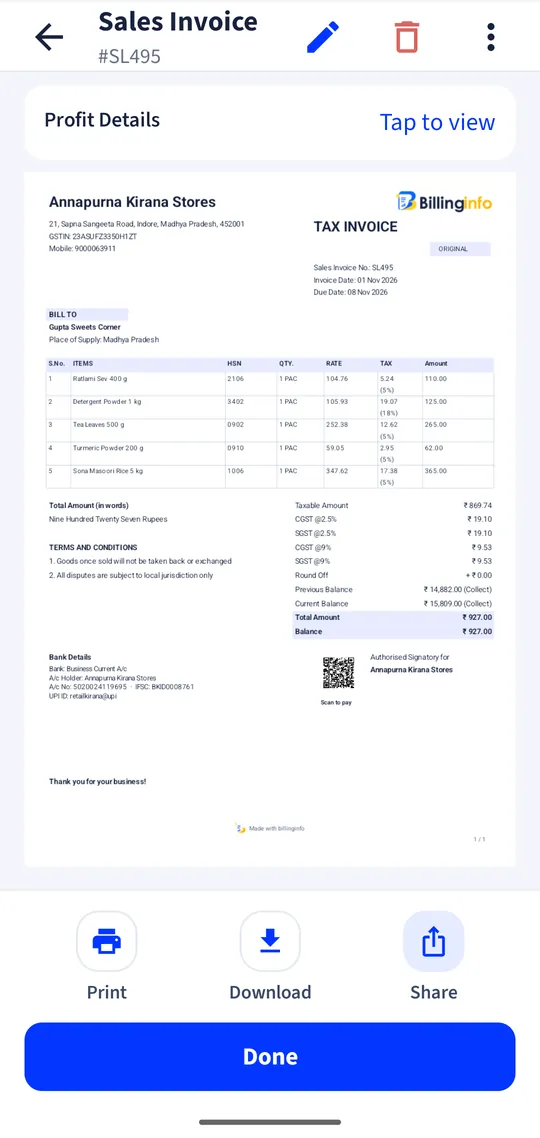
Under GST, a debit note is issued by the supplier to increase the value or tax of an invoice already issued. The law treats a supplementary invoice as a debit note too. The buyer can take credit of the extra GST on it.
In everyday trade, “debit note” is also used for the opposite direction: the buyer's note to a supplier when returning goods. That is a commercial document for the buyer's books. The GST adjustment for such a return is the supplier's credit note. In billinginfo the buyer-side return is a Purchase Return, and the supplier-side increase is a Debit Note.
Because the same word is used both ways, always write the reason and the original invoice number on the note. A note that says “price revision as per contract clause 4, invoice NC/26-27/1182” can be matched by both sides in seconds, and it is what your accountant will look for when GSTR-1 and the buyer's GSTR-2B are compared.
When to use it
- The agreed price was revised upward after the invoice (a price escalation clause).
- You supplied more than invoiced, or under-charged freight or packing.
- The tax rate or amount on the invoice was lower than it should have been.
- As a buyer, you return goods to a supplier and want a record for your books (purchase return).