Last checked 2 November 2026
Who can opt
| Business | Turnover limit (previous year) | Tax rate on turnover |
|---|---|---|
| Traders (goods) | ₹1.5 crore (₹75 lakh in some north-eastern and hill States) | 1% (0.5% CGST + 0.5% SGST) of taxable supplies |
| Manufacturers | ₹1.5 crore (₹75 lakh in some States) | 1% of turnover |
| Restaurants not serving alcohol | ₹1.5 crore (₹75 lakh in some States) | 5% of turnover |
| Service providers and mixed suppliers (section 10(2A)) | ₹50 lakh | 6% (3% + 3%) of turnover |
A trader or manufacturer under the main scheme may also supply services worth up to 10% of last year’s turnover or ₹5 lakh, whichever is higher. The limit is for the whole PAN: all your GSTINs in India together.
Who cannot opt
- Anyone making inter-State outward supplies.
- Manufacturers of ice cream, pan masala, tobacco products and a few other notified goods.
- Non-resident and casual taxable persons.
- Anyone supplying services through an e-commerce operator. Since 1 October 2023 composition taxpayers may sell goods within their State through an e-commerce operator.
- Anyone supplying goods or services not taxable under GST, such as alcohol for human consumption.
If one GSTIN under your PAN opts in, all of them must.
What you give up
- No GST on bills. You issue a bill of supply with the words “composition taxable person, not eligible to collect tax on supplies”.
- No input tax credit. GST on your purchases becomes a cost.
- Your buyers get no credit. Registered business customers may prefer a regular supplier.
- Reverse charge still applies to you on notified purchases, paid in cash.
- You must write “composition taxable person” on your signboard at the shop.
Is it cheaper? A worked example
A kirana store buys goods worth ₹80 lakh a year (most at 5% GST) and sells for ₹1 crore, all to consumers.
| Regular scheme | Composition | |
|---|---|---|
| GST collected from customers | About ₹5,00,000 (5% on ₹1 crore, included in prices) | None |
| Input tax credit | About ₹4,00,000 | None |
| Tax paid to government | About ₹1,00,000 | ₹1,00,000 (1% of ₹1 crore, from your margin) |
| Returns | GSTR-1 and GSTR-3B (monthly or quarterly), GSTR-9 | CMP-08 quarterly, GSTR-4 yearly |
Here the tax is similar, but the composition shop cannot add GST to prices, so the 1% comes out of its margin, while compliance is lighter. For a business selling mostly to registered buyers, or with a high margin on 18% goods, the regular scheme usually works out better. Run your own numbers, and ask your CA if you are unsure.
Returns and payments
| Form | What | Due |
|---|---|---|
| CMP-08 | Statement-cum-challan to pay tax for the quarter | 18th of the month after the quarter |
| GSTR-4 | Annual return | 30 June after the year ends (from FY 2024-25; earlier 30 April) |
| CMP-02 | Opting in for a new financial year | Before the year starts, by 31 March |
| CMP-04 | Opting out voluntarily | Any time; then file ITC-01 to claim credit on stock |
Rule 62 sets the GSTR-4 date. Like other returns, CMP-08 and GSTR-4 cannot be filed more than three years after their due dates.
Switching in or out
Opting in during the year is possible only for new registrations (choose it in the application). Existing taxpayers opt in from 1 April by filing CMP-02 before the year starts, and must reverse credit on stock held that day (Form ITC-03). Leaving is compulsory the day turnover crosses the limit: file CMP-04 within 7 days and start issuing tax invoices. You can then claim credit on stock in hand within 30 days (ITC-01).
Checklist before you opt in
- Add up turnover for all GSTINs under your PAN for the last year. Is it within ₹1.5 crore (or ₹50 lakh for services)?
- List your buyers. If many are registered businesses that want input tax credit, the scheme may cost you customers.
- Check your margin. The 1% (or 5% or 6%) comes out of your price, since you cannot add GST to bills.
- Check your purchases. Under composition, GST paid on purchases becomes a cost; if you buy mostly at 18% and sell at 5%, that matters.
- Make sure you sell only within your State.
- Plan the date: CMP-02 by 31 March for the next year, and ITC-03 within 60 days of opting in.
How billinginfo helps
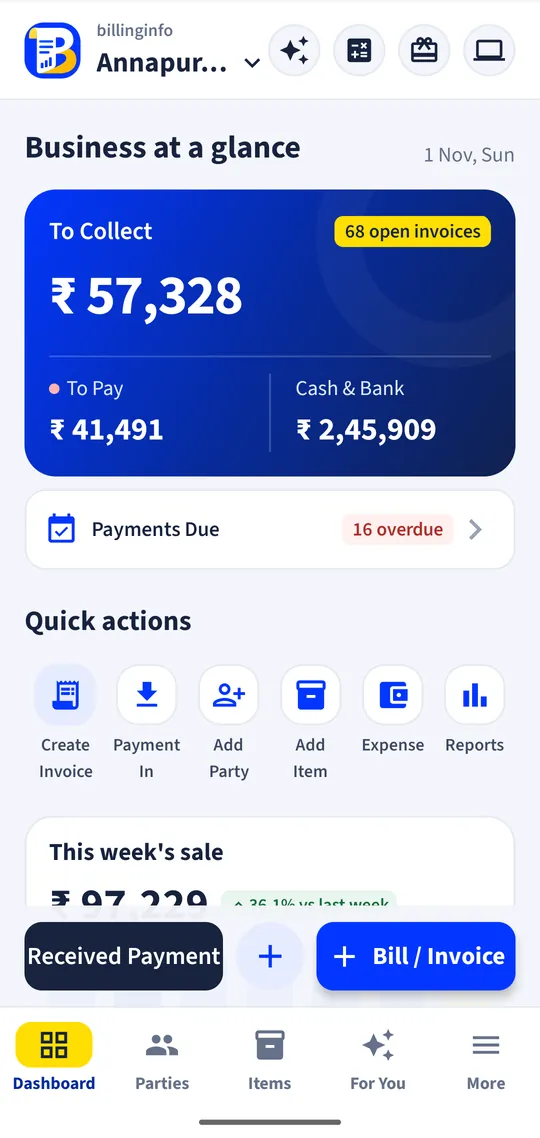
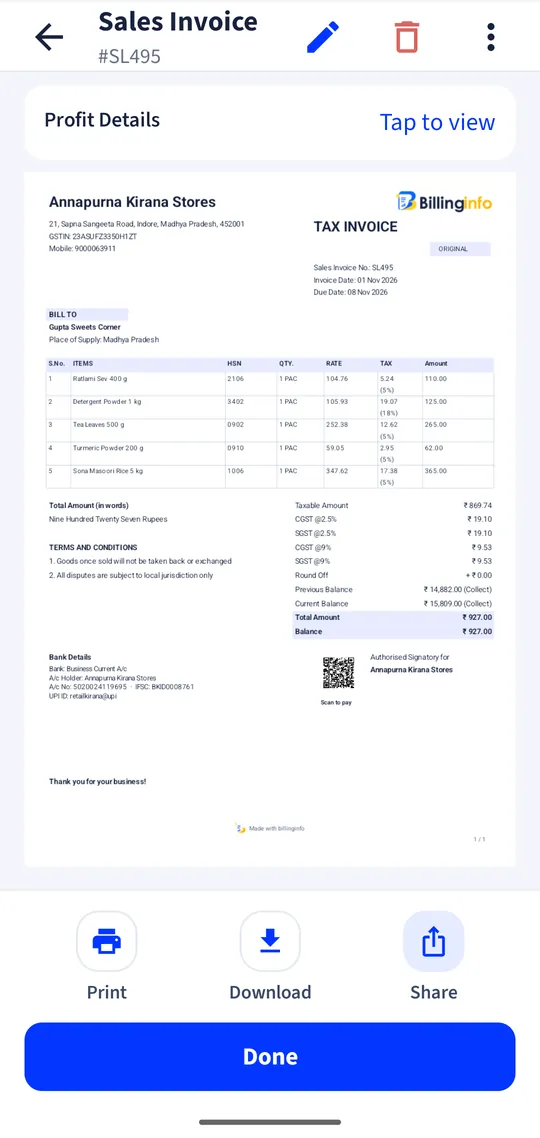
billinginfo makes bills of supply without tax for composition businesses, and tax invoices for regular ones. Your stock, parties and payments work the same either way, and turnover reports show where you stand against the limit.