Last checked 2 November 2026
How it works
For notified supplies (section 9(3) of the CGST Act and section 5(3) of the IGST Act), the recipient is the person liable to pay GST. The supplier bills without tax and marks the invoice “tax payable on reverse charge: Yes”. The buyer pays the GST in cash through GSTR-3B and, if the purchase is for business, claims the same amount back as input tax credit in that return.
Section 9(4) can also put specified purchases from unregistered suppliers under reverse charge; today that covers only notified cases, such as certain purchases by real-estate promoters.
Common services under reverse charge
| Service | Supplier | Who pays |
|---|---|---|
| Goods transport by a GTA (road) | Goods transport agency that has not opted to pay tax itself | Specified recipients: factories, companies, firms, registered persons and others listed |
| Legal services | An advocate or firm of advocates | A business entity |
| Services by a director | Director of the company | The company |
| Sponsorship | Any person | A body corporate or partnership firm |
| Security services | Anyone other than a body corporate | Registered person (some exceptions) |
| Renting of immovable property other than a residential dwelling | An unregistered person | Registered person, except composition taxpayers (from 16-1-2025) |
| Insurance and recovery agents | Agent | Insurance company, bank or NBFC |
The full list is Notification 13/2017-Central Tax (Rate), amended many times. Renting of commercial property by an unregistered landlord was added from 10 October 2024 (Notification 9/2024-CT(R)).
Common goods under reverse charge
Notification 4/2017-Central Tax (Rate) lists goods such as raw cashew nuts, bidi wrapper leaves, tobacco leaves, silk yarn and raw cotton when supplied by an agriculturist, and lottery tickets. From 10 October 2024, metal scrap (chapters 72 to 81) bought by a registered person from an unregistered seller is also under reverse charge (Notification 6/2024-CT(R)). When the scrap seller is registered, the buyer instead deducts 2% TDS under section 51.
A worked example: GTA freight
A registered manufacturer in Ludhiana pays a goods transport agency ₹20,000 freight to send goods to Delhi. The GTA has not opted to pay tax itself.
| Step | Amount |
|---|---|
| Freight bill from the GTA (no tax charged, marked RCM) | ₹20,000 |
| GST under reverse charge at 5% (IGST, inter-State) | ₹1,000 |
| Paid in cash in GSTR-3B Table 3.1(d) | ₹1,000 |
| Input tax credit claimed in the same return (Table 4(A)(3)) | ₹1,000 |
Net cost: zero, but the ₹1,000 must be paid in cash first. It cannot be paid out of credit. A GTA that opts to pay tax itself can charge 5% without credit or 18% with credit (the with-credit option was 12% until 21 September 2025).
Paperwork for the buyer
- Self-invoice for purchases from an unregistered supplier: issue it within 30 days of receiving the supply (Rule 47A, from 1 November 2024).
- Payment voucher when you pay the unregistered supplier (Rule 52).
- When the supplier is registered, its invoice (marked reverse charge) is enough.
- Pay the tax in cash: credit cannot be used to discharge reverse charge.
- Report it in GSTR-3B Table 3.1(d) and claim credit in Table 4(A)(2) or (3).
When the tax is due
| Supply | Time of supply under reverse charge |
|---|---|
| Goods (section 12(3)) | Earliest of: receipt of goods, payment, or 30 days after the supplier’s invoice |
| Services (section 13(3)) | Earlier of: payment, or 60 days after the supplier’s invoice |
Pay late and interest at 18% a year runs from the due date.
Common mistakes
- Paying reverse charge from the credit ledger. It must be cash.
- Forgetting rent paid to an unregistered landlord for a shop or office (since October 2024).
- Supplier charging GST on a GTA bill and the buyer also paying reverse charge: the tax gets paid twice.
- Not issuing self-invoices, so the credit has no supporting document.
How billinginfo helps
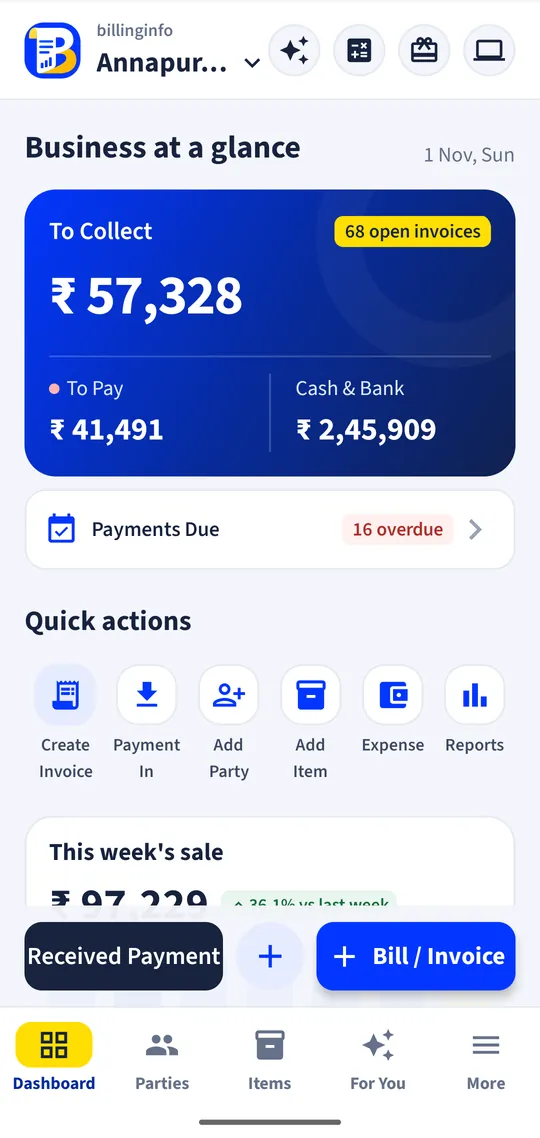
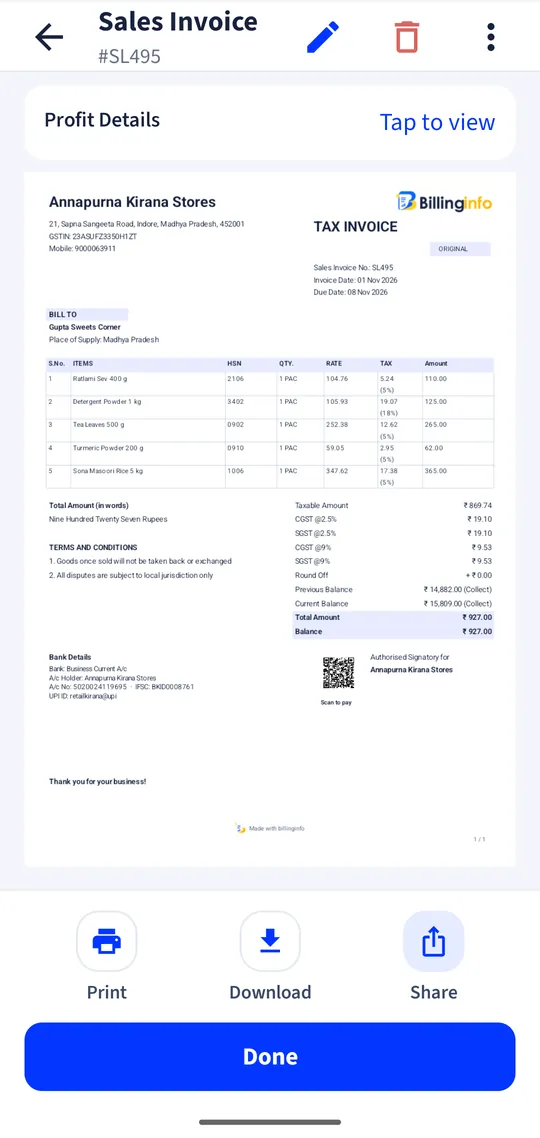
billinginfo can mark a bill as reverse charge, so it prints “tax payable on reverse charge” and the GST reports keep those amounts apart from your normal output tax. Transporters can see how freight bills work on the logistics and transport page.