Last checked 2 November 2026
The slabs at a glance
| Rate | Typical goods and services | Where it comes from |
|---|---|---|
| 0% (exempt) | Fresh fruit and vegetables, unpacked cereals, fresh milk, UHT milk, paneer, bread, roti and khakhra; individual life and health insurance | Exemption notifications (goods: 10/2025-CT(R)) |
| 0.25% | Rough diamonds, precious and semi-precious stones | 9/2025-CT(R), Schedule V |
| 1.5% | Cut and polished diamonds | 9/2025-CT(R), Schedule VI |
| 3% | Gold, silver, jewellery, imitation jewellery, coins | 9/2025-CT(R), Schedule IV |
| 5% | Daily-use packaged foods, soaps, toothpaste and hair oil, medicines, tractors and farm machinery; hotel rooms up to ₹7,500 a night, beauty and fitness services (without ITC) | Schedule I; services 11/2017-CT(R) as amended by 15/2025 |
| 12% | A few remaining entries, such as specified bricks | 14/2025-CT(R) |
| 18% | Most other goods and services: electronics, cement, small cars, ACs, TVs, mobile phones, professional services, restaurants in hotels with tariff above ₹7,500 | Schedule II and services notification |
| 28% | A short list of tobacco items kept in a separate schedule | Schedule VII |
| 40% | Luxury and sin goods: pan masala, aerated and sugared drinks, bigger cars and motorcycles above 350 cc, yachts and aircraft for personal use | Schedule III |
Rates in the table are the total GST. Within a State it splits half CGST and half SGST; between States it is all IGST. The examples are common cases; the exact entry for your HSN code decides your rate.
What changed in September 2025
The 56th GST Council meeting (3 September 2025) approved the rate reform often called GST 2.0, notified on 17 September 2025 and in force from 22 September 2025. The main changes:
- The 12% and 28% slabs were folded into 5% and 18% for most goods.
- Many household items moved down: soaps, shampoo and toothpaste from 18% to 5%; butter, ghee and namkeen from 12% to 5%; ACs, TVs and dishwashers from 28% to 18%; small cars and two-wheelers up to 350 cc from 28% to 18%; cement from 28% to 18%.
- A new 40% rate for a short list of luxury and harmful goods.
- Compensation cess ended on most goods.
- Several services moved: hotel rooms up to ₹7,500 a night and salons, gyms and yoga to 5% without input tax credit; some transport options with credit to 18%.
Bills dated on or after 22 September 2025 use the new rates. For supplies that straddle the change date, the time-of-supply rules in section 14 of the CGST Act decide which rate applies.
Working out GST on a price
Two directions, two formulas:
| You know | Formula | Example at 18% |
|---|---|---|
| Price before tax | GST = price × rate ÷ 100 | ₹10,000 → GST ₹1,800, total ₹11,800 |
| Price including tax | GST = price × rate ÷ (100 + rate) | ₹11,800 → GST ₹1,800, before tax ₹10,000 |
Within a State, halve the GST: CGST ₹900 and SGST ₹900. Try any amount in the GST calculator.
With or without input tax credit
Some lower service rates come with a condition: the supplier cannot claim input tax credit on its own purchases. A hotel charging 5% on a ₹4,000 room cannot claim the GST it paid on furniture or linen. The rate notification says “provided that credit of input tax… has not been taken”. If you choose such a rate, remember to switch off credit on related purchases.
Finding the rate for your item
- Find the HSN or SAC code (see the HSN guide).
- Look the code up in the rate schedule. Our HSN code finder shows a suggested GST 2.0 rate for about 7,500 codes where the schedule gives one clear answer.
- Read the condition in the description: many entries depend on packing (pre-packaged and labelled or not), price per piece, or use.
- Watch for later notifications. The rate schedules are amended from time to time; for example a notification from 1 November 2026 added retreaded tractor tyres to the 5% list.
Common mistakes
- Charging the old rate on old stock. The rate depends on the date of supply, not the date you bought the goods.
- Assuming a whole category has one rate. Biscuits, footwear and textiles have had conditions on price or content.
- Adding GST on top of MRP. MRP includes tax; GST is worked backwards from your selling price.
- Claiming input credit on purchases used for a “without ITC” service.
How billinginfo helps
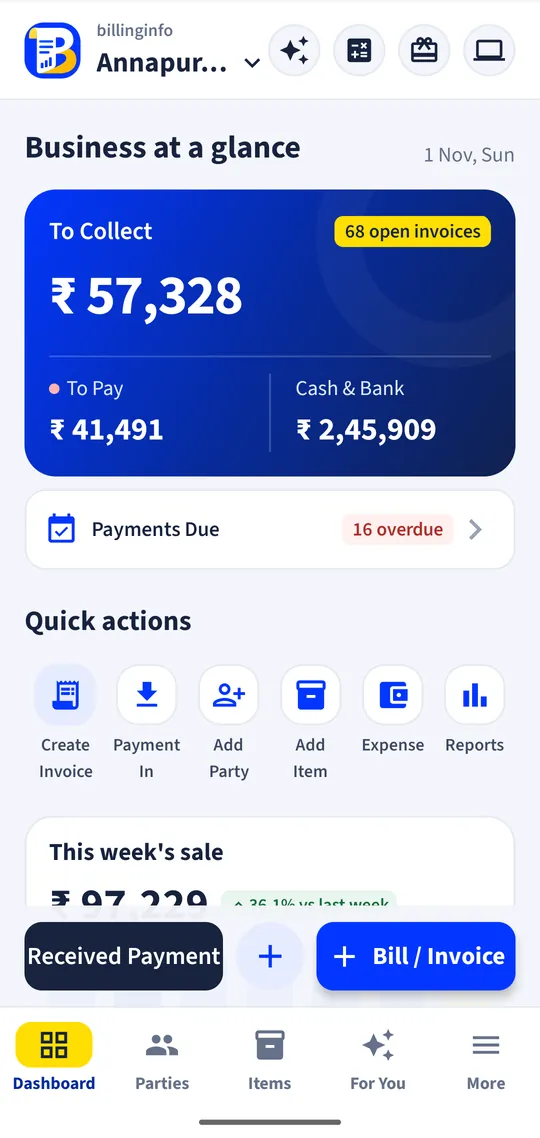
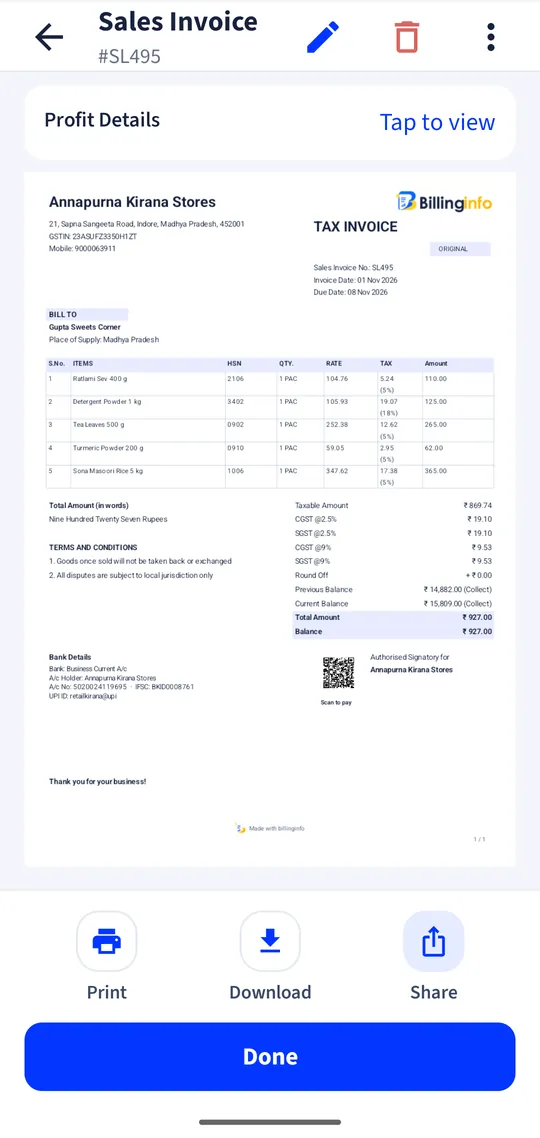
billinginfo stores a GST rate on every item and picks CGST and SGST or IGST automatically. Its HSN list carries suggested GST 2.0 rates from the September 2025 schedules, and updates reach the app without a new download. Change a rate once on the item and every new bill uses it.