Last checked 2 November 2026
Before 31 March
- Choose your scheme for next year. To move into the composition scheme from 1 April, file CMP-02 by 31 March (and ITC-03 for stock).
- Letter of Undertaking (LUT). Exporters and SEZ suppliers who want to supply without paying IGST should file a fresh LUT (Form RFD-11) for the new year before their first export of the year.
- Check your turnover against thresholds. If this year crossed ₹5 crore, e-invoicing and 6-digit HSN apply from 1 April. If it crossed ₹5 crore, you also lose QRMP eligibility.
- Count stock. A physical count on 31 March gives the closing stock for your books and shows losses on which credit must be reversed.
- Chase pending purchase bills so suppliers report them before the year closes.
On 1 April
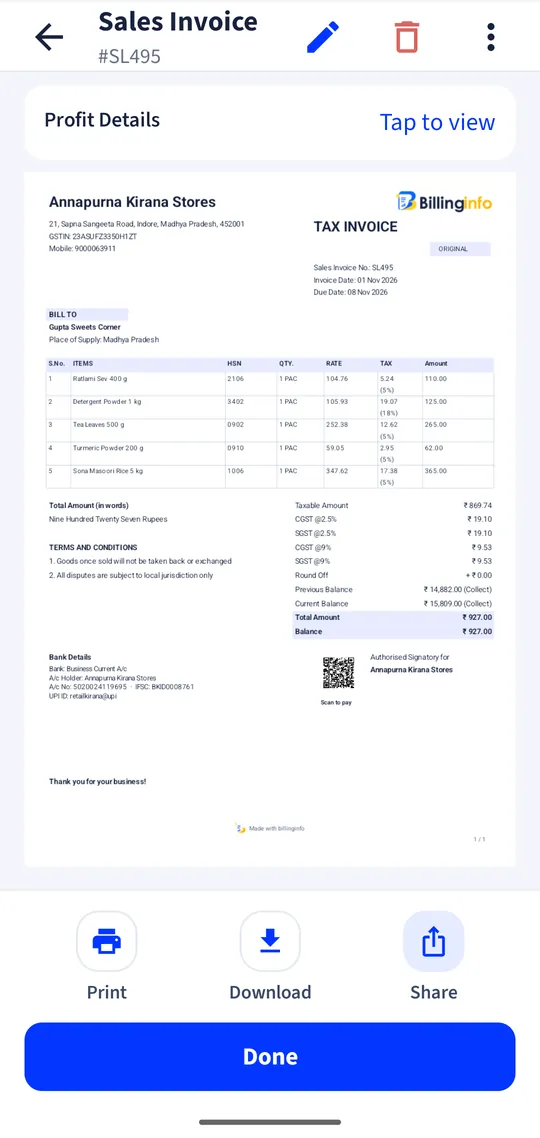
- Start a new invoice series. Invoice numbers must be unique within a financial year (Rule 46), so start fresh numbering or put the year in the prefix: INV/27-28/0001.
- Do the same for credit notes, debit notes, delivery challans and receipts.
- Carry forward party balances, stock and cash and bank balances as opening balances.
- If you use QRMP, the choice for April–June can be changed on the portal until 30 April.
By 30 November: the deadline for last year’s fixes
Two important limits fall on 30 November after the year ends (or the date you file the annual return, if earlier):
- Input tax credit on last year’s invoices and debit notes (section 16(4)). Check GSTR-2B for anything missed.
- Credit notes for last year’s sales (section 34(2)), and amendments to last year’s invoices in GSTR-1.
A business closing 2025-26 has until 30 November 2026 for both. After that, missed credit is lost and wrong sales cannot be reduced.
By 31 December: annual return
| Return | Who files | Due |
|---|---|---|
| GSTR-9 | Regular taxpayers with aggregate turnover above ₹2 crore (optional up to ₹2 crore, by yearly notification) | 31 December |
| GSTR-9C | Taxpayers with aggregate turnover above ₹5 crore: a self-certified reconciliation statement | 31 December |
| GSTR-4 | Composition taxpayers | 30 June |
Late fee for GSTR-9 (Notification 7/2023-Central Tax): ₹50 a day (₹25 + ₹25) for turnover up to ₹5 crore, ₹100 a day above ₹5 crore up to ₹20 crore, each capped at 0.04% of turnover in the State; ₹200 a day above ₹20 crore, capped at 0.5%. Annual returns too are barred three years after the due date.
A sample timeline for 2026-27
| Date | Task |
|---|---|
| 31 March 2027 | Stock count; CMP-02 if moving to composition; LUT for 2027-28 if exporting |
| 1 April 2027 | New invoice series; opening balances |
| 11 / 20 April 2027 | GSTR-1 and GSTR-3B for March 2027 (monthly filers) |
| 30 June 2027 | GSTR-4 for 2026-27 (composition) |
| 30 November 2027 | Last date for 2026-27 credit and credit notes |
| 31 December 2027 | GSTR-9 and GSTR-9C for 2026-27 |
Year-end in your books, not just GST
- Match cash in hand and every bank balance with the statements on 31 March.
- Send ledger statements to your top customers and suppliers and confirm their balances.
- Write off bad debts and damaged stock with proper notes; reverse credit on written-off stock.
- Keep the year’s bills, credit notes and challans. GST records must be kept for 72 months from the due date of the annual return.
- Check income-tax items too: TDS returns for the January–March quarter are due by 31 May.
Common mistakes
- Continuing last year’s invoice numbers into April.
- Exporting in April before filing the new LUT.
- Forgetting that the 30 November limit applies to credit notes as well as credit.
- Filing GSTR-9 without reconciling it with the twelve GSTR-3Bs and the books. Differences found then are paid in cash.
How billinginfo helps
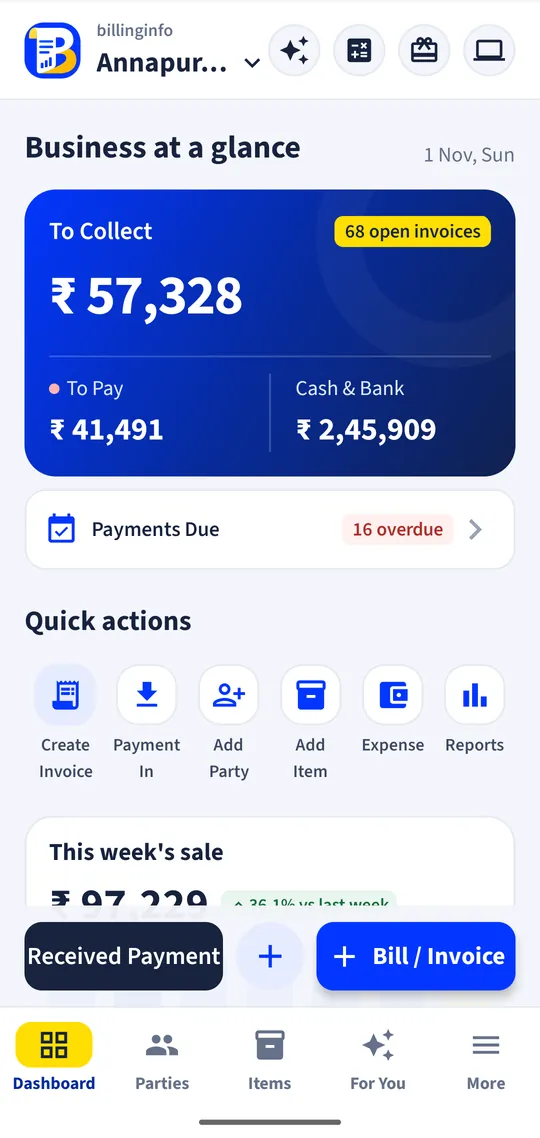
billinginfo can close the financial year and carry balances forward, and lets you set new prefixes and starting numbers for each bill type for the new year. Year-wise GSTR-1, GSTR-2 and GSTR-3B reports and the profit and loss and balance sheet give your accountant what the annual return needs, with Excel and Tally export.